Tuesday, October 10, 2017

Banks scandals bill at $480m as industry super fights back governance reforms

Source: Industry Super Australia


Scandals, alleged misconduct, and poor financial advice have cost major banks and insurance companies almost half a billion dollars in payouts and compensation over the past two years, according to research by Industry Super Australia.

The largely union-backed umbrella group is using the rising payouts bill for banks and insurers in its ongoing battle to thwart moves by the Federal Government to overhaul the composition of superannuation fund boards to mandate at least a third of trustees are independent.

In addition to shaking up the role of trustees, the government is also pushing to ensure the chairs of super boards are independent.

Evidence to be presented to a Senate committee examining the governance of super fund boards will claim that banks and insurers paid out more than $480 million in compensation, reimbursements and refunds for alleged financial misconduct.

Industry Super head of public affairs Matt Linden will present the scandals line by line which includes $200 million of "money for nothing" compensation after banks charged for advice fees but provided no service to clients.

"These are only the things that have been made public where there's been admitted fault. It doesn't include scandals that we've seen on the front page recently around things like alleged money laundering," Mr Linden told the ABC's AM program.

"We certainly do not accept the proposition that mandating a particular quota of independent directors drawn from the finance sector is a sensible way to outcomes for industry super fund members."

Key brands named by Industry Super Australia include flashpoints of recent scandals including CommInsure, Commonwealth Bank, ANZ, Westpac, National Australia Bank, Bankwest, AMP.

Industry Super Australia (ISA) argues that in contrast not-for-profit industry funds have avoided scandals and continue to outperform funds owned by banks and insurers.

As the government attempts to push through changes to trustee arrangements, ISA maintains that the "equal representation model" where trustees are split between employers and worker representatives continues to be used by the world's top performing super funds.

Financial Services Minister Kelly O'Dywer has consistenly rejected claims the push to overhaul super boards is part of an idealogical union busting mission.

Ms O'Dwyer recently announced the superannuation overhaul bills would be re-introduced being defeated in 2015 by the Senate crossbench led by Senator Nick Xenophon.

However, Matt Linden is confident of once again winning support to block the legislation.

"When I've talked to those crossbenchers they have not had people walking in their doors complaining about the returns they're getting from industry super funds," Mr Linden said.

"However they'd had dozens come in their doors which been ripped off in scandals perpetrated by the banks."

The payouts are based on public information and cover a two year period from September 2015 but do not include private settlements or payments made to financial literacy or community programs.

The government is also facing a fightback from other parties such as the Australian Institute of Superannuation Trustees.

"It is inappropriate to mandate a governance model to apply to all superannuation funds because no evidence has been presented that the current system is failing or that mandating independence would be beneficial," the AIST submission says.

ISA also says it is false to the government to claim that having independent directors on boards is international; best practice.

ISA quotes research showing the 70 percent of independent directors are either current or former chief executives with 60 percent coming banking or resource sectors.

In addition to Industry Super Australia, the hearing by the Senate Standing Committee on Economics will take evidence from David Murray (head of the government's financial system inquiry), former ACCC chairman Graeme Samuel and the former Reserve Bank governor Bernie Fraser.

The Australian Securities & Investments Commission, the Australian Prudential Regulation Authority, the Financial Services Councilm the ACTU and Treasury have made submissions to the inquiry and will also give evidence.


Friday, October 6, 2017

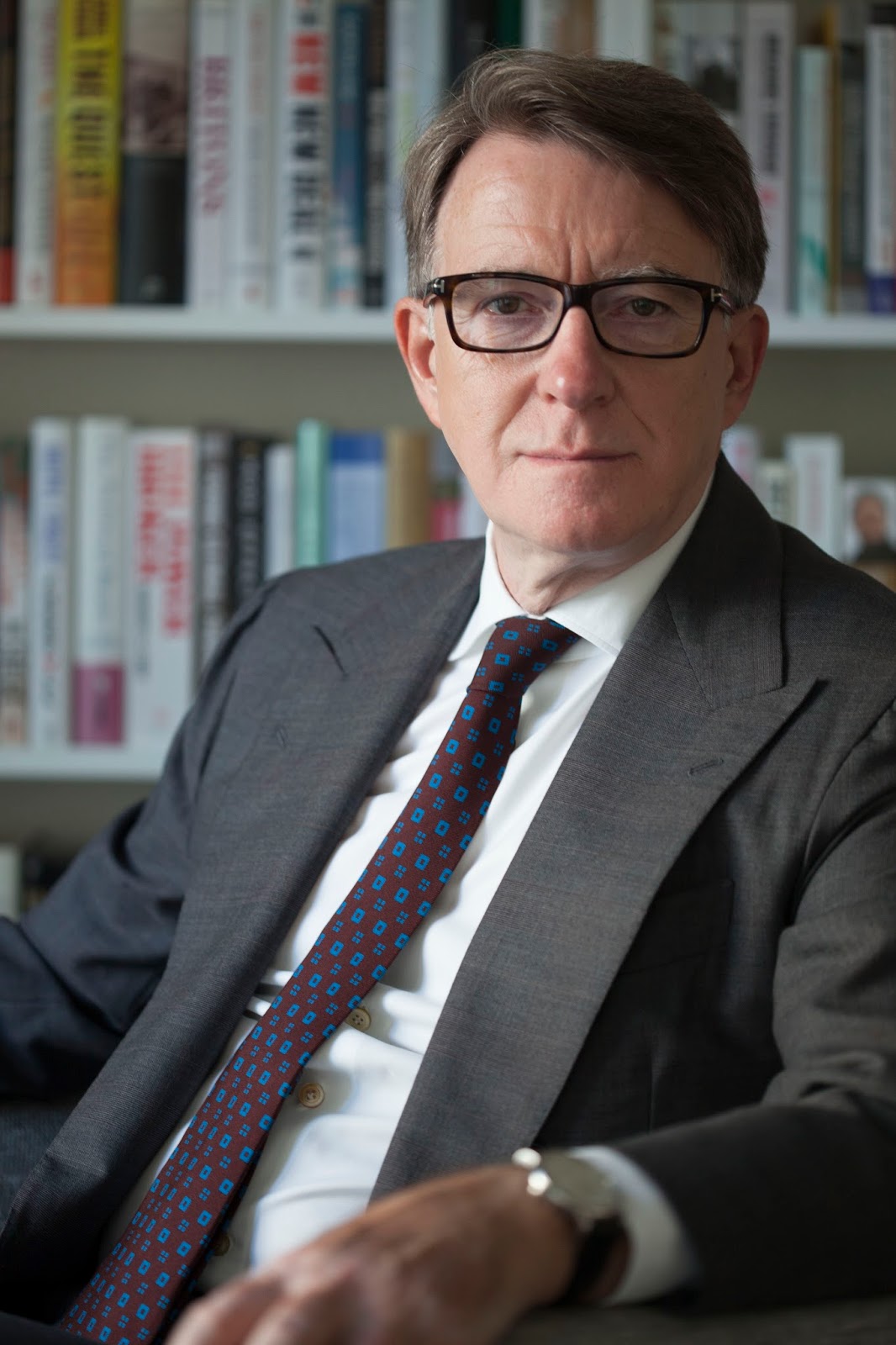
UK needs Australia's help in charting Brexit trade chaos says Peter Mandelson


An influential figure from the Tony Blair era says Australia has a major role to play in helping Britain rebuild fractured trade relationships after last year's surprise vote to leave the European Union.

Former Labour cabinet secretary Peter Mandelson says Australia can help Britain keep its place on the world stage as the fallout of Brexit continues to create uncertainty about current and potential trade deals.

Peter Mandelson speaks with the ABC'S Peter Ryan

Mr Mandelson has been in Sydney and Melbourne to help lay the groundwork for a free trade deal between Australia and the UK which remains on hold until the terms of Britain's exit from the EU are finalised.

"What I'm finding is quite of lot of bemusement about what Britain has done. We turned our backs on Australia in the 1970s order to join Europe. Now we're divorcing Europe all these decades later," Mr Mandelson told the ABC.

"I think many Australian business people just wonder why on earth we should throw all the sticks and all the rules up in the air without any idea where they're going to land."

Mr Mandelson, a former Northern Ireland secretary and EU trade commissioner, says with Prime Minister Theresa May refusing to rule out a "hard Brexit" Australia can help Britain rework it’s image of being protectionist and isolationist.

"One thing Australia can do for Britain is to reintroduce us to the world of trade policy and trade negotiation from which we've been absent for nearly 50 years as we've relied on the size and the heft of the EU," Mr Mandelson said.

"We are part of each other's DNA, we do have a special friendship. But with the extraordinary turn that Britain is now taking in leaving Europe, there is an opportunity to forge a further relationship built on trade realities."

Mr Mandelson was a stalwart of the "remain" campaign and has made his first visit to Australia to offer advice to businesses in his role as chairman of the consultancy firm Global Counsel.

He acknowleges Australia's key trade relationship are now with the United States and China but says Australia was gifted an opportunity in the 1970s when Britain softened traditional links in favour of Europe.

"The biggest favour that Britain ever did for Australia was saying in the 1970s that the protectionist, rather isolationist exclusive relationship it had with Britain needed to end," Mr Mandelson said.

"We forced Australia through the decision of turning our backs and to going into Europe,  to create an open economy and look to its own region.

"Just look at the fortune and prosperity that Australia has been able to achieve. For Britain we've got to make the same judgement that there's no future in retreating into ourselves."

However, Mr Mandelson concedes it might be in Australia's best interests to prioritise an agreement with the EU ahead of one with Britain.

A potential flashpoint from Brexit is the trade relationship between Northern Ireland and the Republic of Ireland which was created after decades of sectarian violence.

Mr Mandelson says after the Good Friday agreement of 1998 saw Northern Ireland to keep its links with the UK but allowed it to participate in  an "all Ireland" economy without hard borders.

"What Brexit does is to just reinsert a border down the middle because when we leave the EU we won't be in a single market. That is going to reintroduce not just trade frictions but political tensions which could very well undermine all that we've achieved in Northern Ireland," Mr Mandelson said.

"I think over time people are going to have to choose between the political settlement they have and the economic future and prospects that they want."

Mr Mandelson slammed Prime Minister David Cameron's decision to hold a Brexit referendum as "not the finest hour for Britain's political elite."

"Britain's political elite was given a good kicking in the reference and in a sense who can be surprised? The British people emerged from the global financial crisis bearing a lot of pain for other people's policy errors."

As the uncertainty about Brexit continues, Mr Mandelson says calling the referendum was "an utterly irresponsible thing to do."

Wednesday, October 4, 2017

IMF warns on rising household debt and risks of "debt overhang"

Australia's high levels of household debt leave it potentially exposed to a global economic shock or a banking crisis, the International Monetary Fund has warned.

An IMF study into highly leveraged households and financial stability singles out Australia where household debt has risen to 100 percent of GDP, well ahead of other advanced economies where the ratio is lower at 63 percent.

"Higher growth in household debt is associated with a greater probability of banking crises," according to the IMF's latest Global Financial Stability Report.

"New empirical studies - as well as recent experience from the global financial crisis - have shown that increases in private sector credit, including household debt, may raise the likelihood of a financial crisis and could lead to lower growth."

The IMF warns the level of household debt "remains high by historical standards" and "has kept growing in other advanced economies such as Australia and Canada".

Listen to my report from The World Today

While report says that debt can be positive in the long term, it cites research showing that high household indebtedness can cause "a significant debt overhang when a country faces extreme negative shocks".

"The global financial crisis suggests that high household debt can be a source of financial vulnerability and lead to prolonged recessions".

In addition to Australia and Canada, the study says Cyprus, Denmark, Switzerland and the Netherlands are also exposed to significantly higher levels of household debt.

The Reserve Bank of Australia has repeatedly warned about rising levels of household debt and that slowing wages growth means some consumers could struggle to meet mortgage repayments when interest rates start rising.


"Growth in housing debt has been outpacing the slow growth in household incomes for some time," governor Dr Philip Lowe said in a statement.

While the IMF points to positive effects of higher debt of through higher growth and lower unemployment, it warns the benefits are typically reversed in three to five years.

"There is a trade-off between the short-term benefits of rising household debt to growth and its medium-term costs to macroeconomic and financial stability," the study says.

The IMF also warned that some households increase debt and consumption based on the perceived wealth of their real estate investments.

"Households that base their expectations solely on extrapolations from past events, when house prices have been growing, may increase their borrowing during housing booms because they expect their home equity to continue growing," the research says.

Globally, the median household debt-to-GDP ratio among emerging market economies increased from 15 percent in 2008 to 21 percent in 2016.

Among advanced economies, the ratio increased from 52 percent to 63 percent over the same period.

The IMF says the negative medium-term consequences of higher household debt are more pronounced for advanced economies than for emerging market economies, where household debt is lower.

However, the IMF suggests that fallout from high household indebtedness could be softened if countries improve their financial regulation, reduce dependence on external financing, adopt flexible exchange rates, and lower income inequality.

The IMF's study is based on a study of more than 80 advanced and emerging economies where debt levels are rising a decade after the global financial crisis.


Monday, October 2, 2017

Rates to rise within six months warns RBA "shadow" board


Predictions of a return to higher interest rates sooner rather than later are heating up with a group of eminent economists tipping the first move could be within the next six months.

The "shadow" Reserve Bank board at the Australian National University cites improving local and global economic factors as key reasons for the first cash rate rise since November 2010.

While no means a certainty, the ANU's nine member board sees the probability for a rate rise in six months at 73 percent, up four percentage points from the last vote in September.


"What's becoming increasingly clear this month is that the shadow board thinks that the next move for interest rates is likely to be up and more likely than not, it will be within the next six months," Mr Bloxham told the ABC.

"Our own view is that the economy will be in a position by the early part of next year where the RBA will probably consider that it will need to start normalising its cash rate."

The Reserve Bank board holds its October meeting tomorrow with money markets predicting a 100 percent probability that the cash rate will remain steady at the historic low of 1.5 percent.

The meeting will be the first since the most recent national accounts showed solid economic growth in the June quarter and the latest employment figures from the Australian Bureau of Statistics revealed another sharp jump in the number of people in full time jobs.

The cash rate began falling from its most recent high of 4.75 percent in November 2011 as the global economy slowed and the Reserve Bank sought to tame a high Australian dollar which hit 110 US cents in July 2011.

Mr Bloxham says the last piece of the "puzzle" for the Reserve Bank will be evidence of rising inflation and higher wages after a long period of sluggish wage growth.

Also critical, Mr Bloxham says, will be confirmation that the global economy is normalising a decade after the global financial crisis.

"If you look across the global economy at the moment we're seeing the most synchronised upswing in growth that we've seen since 2010," Mr Bloxham said.

However, Mr Bloxham believes the Reserve Bank will be cautious about the pace of rate rises given higher indebted households in Australia's east coast which might be exposed to higher mortgage repayments.

"So when the RBA gets going in lifting its cash rate we think they'll be quite slow. It will be quite a drawn out process of gradual normalisation over a long period," Mr Bloxham said.

The ANU's shadow board is at odds with other economists who see a rate rise as a most distant likelihood.

Westpac chief economist Bill Evans - who correctly predicted the RBA's dramatic rate cuts - believes the first rate rise might not be needed before 2020.

Wednesday, September 27, 2017

AGL pushes back on pressure to keep Liddell open, urges more policy and regulatory "certainty"


The energy giant AGL is continuing to push back against federal government pressure and possible intervention to keep its Liddell power station in the New South Wales Hunter Valley open beyond its scheduled closure in 2022.

Speaking at today's annual general meeting, chairman Jerry Maycock called for "a greater degree of certainty in policy and regulatory settings" to encourage AGL and its competitors to invest in new energy infrastructure.

While Mr Maycock said AGL would continue to negotiate with the government to ensure secure energy, he warned that the 45 year old Liddell station was nearing the end of ts lifespan and was not at peak reliability.

"It is still likely to experience unanticipated outages and will become less reliable as it approaches the end of its operating life in 2022 - even with significant planned investment by the company of $159 million in the plant before it closes," Mr Maycock said in Melbourne.

"While it may be technically possible to extend the life of the power station, the costs of doing so in a way to ensure the plant is even moderately reliable are certain to be substantial."

AGL announced in 2015 that as part of its greenhouse gas policy, its coal-fired power stations including Liddell would close by 2022.

In what is seen as possible market intervention, Prime Minister Malcolm Turnbull has given AGL until mid-December to deliver a plan to either keep Liddell operating or options to sell it.

AGL has committed to announcing its strategy post-2022 which will include the replacement of a significant portion of Liddell's base load generation with new technology.

Chief executive Andy Vesey – who was summoned to Canberra recently over the planned Liddell closure – said there were attractive opportunities to repurpose the site for gas fired or battery storage energy.

“I want to emphasise that no one has more to lose from failing to mitigate the market impact of Liddell’s closure than AGL,” Mr Vesey told shareholders.

“We support measures that would prevent the disorderly removal of plant and would enable market outcomes that would support this future.”

However, Mr Maycock told shareholders that any new investment needs with fit with AGL's strategic vision including "sufficiently attractive" returns to shareholders.

Mr Maycock raised a number of AGL's concerns including whether investment in Liddell or a potential sale was in line with regulatory requirements including any renewable energy target.

"Are the risks from future changes to law or regulation acceptable and are any changes to those laws and regulations necessary to support the investment?" Mr Maycock asked.

"Is the investment robust against reasonably foreseeable changes in technology, customer behaviour, digital disruption, economic growth or dislocation?"

Last week, AGL opened the Liddell station to the media to demonstrate the ageing technology and susceptibility to outages especially in peak periods during summer heatwaves.


AGL is also dealing with shareholder discontent after last year’s meeting when 25 percent investors voted against its 2016 remuneration report, constituting a "first strike".

Mr Maycock said since then, the AGL board was “seeking to understand” the concerns but had made changes to remuneration practices to avoid another protest vote given that a "second strike" would force a boardroom spill.

As it deals with higher energy prices, Mr Maycock said shareholders would now be offered discounted energy plans.

AGL reported a statutory profit of $539 million in 2017 after posting a loss of $408 in the previous year.


AGL shares were trading slightly weaker at $22.87 at 1055 AEST.

Friday, August 18, 2017

Five Commonwealth Bank customers allegedly financed terror says Austrac

Five customers of the Commonwealth Bank allegedly financed terrorism through six transactions using intelligent deposit machines, according to the financial intelligence agency Austrac.

Listen to my report on The World Today

In response to questions from a senate committee about its case against the CBA, the agency's acting chief executive Peter Clark pointed the terror financing allegations contained in Austrac's 600 page statement of claim filed in the Federal Court on August 3.

"Of the late threshold transaction reports we've claimed that six of those relate to cash transactions by five customers whom the bank has accessed as (having) a potential link to terrorism or terrorism financing," Mr Clark said.

Mr Clark also refused to say if he was confident that the CBA was now complying with anti-money laundering and counter terrorism legislation given that the case set to begin on September 4.

However in response to a question from Queensland Labor senator Murray Watt, Mr Clark gave Australia's other major banks - Westpac, the ANZ, and National Australia Bank - an "all clear".

"We've looked at the other banks in particular and we have not identified the same issues with those banks," Mr Clark said.

The Commonwealth Bank is defending allegations from Austrac (the Australian Transactions Reports and Analysis Centre) that it breached anti-money laundering rules on almost 54,000 occasions and did not report suspected criminal activity when it emerged.

While conceding "mistakes were made", the Commonwealth Bank has repeatedly said there was intention to financially benefit from alleged transactions by drug runners, terrorist financers and other criminal elements.

Mr Clark was also pressed by Greens senator Peter Whish-Wilson to explain why Austrac had levelled civil rather than criminal charges against Australia's biggest bank.

"The evidence we've gathered as part of the matter supports taking civil penalty action. We do have some criminal provisions but they don't apply to the particular offences in this matter," Mr Clark said.

"We give very careful consideration to what measures we seek to apply particularly when it's of a serious nature. So a lot of careful consideration was given before filing civil penalty proceedings in this case."

Independent senator Derryn Hinch quizzed Mr Clark on the extent of the potential penalties which if applied to each of the 54,000 breaches would amount to around $960 billion.

"I can't comment on the penalty other than to say it's a matter for the Federal Court. There's a maximum penalty per contravention and that's $18 million," Mr Clark said.

However industry figures say speculation in the media about the maximum penalty is unrealistic and unsustainable while Ian Narev told the ABC that some estimates were "out of the ballpark".

Earlier this week, Commonwealth Bank chairman Catherine Livingstone said chief executive Ian Narev would retire by June 30, 2018 as part of succession planning.

Mr Narev's scheduled departure follows a decision by the CBA board to cut 2017 bonuses for Mr Narev and the CBA group executive to zero as it deals with the Austrac allegations.

In a separate investigation, the Australian Securities & Investments Commission is examining whether the CBA breached continuous disclosure rules when it did not report the money laundering risks when they emerged in 2015.

Friday, August 11, 2017

ASIC to probe Commonwealth Bank's handling over money laundering allegations

The Australian Securities and Investments Commission has confirmed it will investigate the Commonwealth Bank's handling of suspicions that its intelligent deposit machines were used by money launderers and criminal gangs.

Chairman Greg Medcraft says the corporate regulator will investigate whether the CBA's board complied with continuous disclosure laws when it decided not to alert investors to the suspicious behaviour.

Commonwealth Bank chairman Catherine Livingstone said earlier this week that the bank's board first became aware in the second half of 2015 that the CBA's intelligent deposit machines were at risk of being targeted by criminal elements including money launderers.

Speaking to a parliamentary joint committee in Sydney this morning, Mr Medcraft said ASIC would look specifically at whether the CBA's officers and directors complied with their disclosure duties under the Corporations Act.

"I wanted to inform the committee that ASIC has commenced inquiries into this matter and any consequences this matter has for the laws we administer," Mr Medcraft said.

Mr Medcraft said the probe would examine whether the CBA complied with their licensing obligations "to act efficiently, honestly and fairly" in line with a requirement to report potential liabilities.

Chief executive Ian Narev has rejected criticism that the bank's board should have informed investors as soon as it became aware of the gravity of the money laundering allegations.

"In an organisation of this size there are individual items that come to the attention of board and management from regulators and others all the time," Mr Narev told the ABC on Wednesday.

"We shouldn't and can't be in a situation where we could disclose every time anything comes to our attention. That would end up being very confusing to the market."

The Treasurer Scott Morrison yesterday described the latest scandal engulfing the Commonwealth Bank as "an epic fail" and "incredibly serious".

Mr Morrison said the decision not to disclose the suspicions to investors was one of the reasons he was "puzzled" about the CBA's handling of the allegations.

Mr Medcraft noted that companies including the CBA were not required to alert ASIC to breaches of anti-money laundering and terror financing laws.

However, in his address to the parliamentary committee Mr Medcraft repeated his earlier concerns about the importance of culture in financial services firms.

"Our view is that culture is a set of shared values and assumptions within an organisation," Mr Medcraft said.

"It reflects the underlying mindset of an organisation and the unwritten rules for how things really work."

"If the culture and values of a business are not aligned with customer outcomes it is easy to see how a trust deficit will emerge and this will impact its long term sustainability."

Without specifically mentioning the Commonwealth Bank, Mr Medcraft alluded to an earlier case involving the Centro property group where disclosure rules were breached.

Mr Medcraft said directors needed to "bring professional scepticism in exercising their role" while ensuring the effectiveness of risk management systems.

The ASIC investigation of the money laundering scandal is the latest chapter overshadowing the CBA's full year profit of $9.93 billion announced on Wednesday.

The financial intelligence agency AUSTRAC has alleged that the Commonwealth breached anti money laundering regulations on almost 54,000 occasions and failed to report suspicious activity when they become aware.

The Commonwealth Bank is preparing a defence while chief executive Ian Narev has conceded that "mistakes were made" in the handling of the scandal.


Friday, August 4, 2017

Reserve Bank bullish on economy but worries about rising Australian dollar

The Reserve Bank has slightly downgraded its growth forecasts for the Australian economy while predicting a bounce back over the next few years as inflation returns to normal levels.

In its quarterly statement on monetary policy released this morning, the RBA sees growth in December 2017 of two to three percent edging back from 2.5 to 3.5 percent in the previous forecast in May.

"The economy is expected to grow at an annual rate of around 3 percent over the next couple of years which is a bit higher than estimates of potential growth," the RBA says.

After falling below the RBA's target band of 2 to 3 percent in the most recent quarter, the central bank seeing inflation returning to 2.5 to 3.5 percent by June next year.

The RBA cites business investment growth, a higher iron ore price and an unemployment rate of below 5.5 percent as evidence of its more positive outlook.

"The outlook continues to be supported by accommodating monetary policy and an improvement in the global economy," the statement says.

The Reserve Bank left the cash rate on hold at its August meeting judging the record low 1.5 percent level to be consistent with sustainable economic growth.

The RBA believes the pickup in inflation will be boosted by a declining capacity in the labour market which is expected to lead to a gradual increase in wages growth from the currently low levels.

The RBA believes the recent decision by the Fair Work Commission to increase minimum and award wages could "add a little" to wages growth in the September quarter.

"Inflationary pressures would instead emerge more quickly if workers seek to catch up after a long period of low wage growth," the RBA says.

It also believes increases in the tobacco excise over the next few years will help push inflation higher.

However, the RBA repeated concerns that the Australian dollar - which broke through 80 US cents earlier this week - has been at levels not seen since 2014.

The statement warns that its forecasts for growth and inflation rely on the exchange rate remaining around current levels.

"Further exchange rate appreciation would tend to generate a slower pickup in economic activity and inflation than currently forecast."

Despite the bullish outlook, the RBA is warning that continued slow wage growth could continue for "some time" and weigh on a consumption driven recovery.

"Some households may feel constrained from spending more out of their current incomes because of high levels of household debt," the RBA says.

"This effect would become more prominent if housing prices and other housing market conditions were to weaken significantly."

The RBA says while established real estate remains strong in Australian east coast cites, conditions have eased more so in Sydney rather than Melbourne.


Tuesday, July 18, 2017

Reserve Bank softens up borrowers for "neutral" cash rate of 3.5 pc; A$ surges

The Reserve Bank is continuing its campaign to soften up highly leveraged borrowers for eventual interest rate rises after a long period at record low levels.

The central bank is now busy estimating what a "neutral" interest rate might look like as the Australian economy continues to show patchy signs of recent strength.


In the minutes from its July meeting a fortnight ago when rates were left on hold at 1.5 percent, the RBA has signalled that to keep growth and inflation in check the "neutral nominal cash rate" would need to rise to around 3.5 percent.


The minutes show the RBA's pursuit for a "goldilocks rate" - not too high or too low - comes as as central banks around the world such as the US Federal Reserve signal conditions are right to slowly raise rates from emergency levels.


The predictions for a higher cash rate will put investor and residential borrowers on alert given high levels of loans issued at the record low cash rate.


"All estimates of the neutral real interest rate for Australia suggested that monetary policy had been expansionary for the previous five years or so," the minutes say.


"A reduction in risk aversion and/or increase in the potential growth rate could see the neutral real interest rate rise again.


"A number of central banks had become more positive about domestic economic conditions, and financial market pricing suggested that there had been upward revisions to the expected path of future monetary policy."


The RBA noted that despite slower economic growth in the March quarter, key indicators such as the labour market, wages growth and retails sales had been gradually improving in Australia.


Although the Australian Prudential Regulation Authority (APRA) has been cracking down on banks to maintain a cap on investor loans, the RBA says it is too early to assess their full effect.


While the July meeting was held before the recent resurgence of the Australian dollar, the minutes show the economy remains exposed to any spike against the US currency.


"The depreciation of the exchange rate since 2013 has assisted the economy in the transition from the mining boom," the minutes say.


"An appreciating exchange rate would complicate this adjustment."


Reserve Bank members are also concerned about rising wholesale electricity prices in the first half of 2017.


"This has led to significant increases in the context of efforts to address climate change and to alter Australia's energy mix," the minutes say.


"Concerns about energy security , reliability and costs has been heightened .. partly reflecting policy uncertainty."


Despite the RBA's efforts to manage expectations, concerns remain that anything but a gradual increase would leave indebted borrowers in Sydney, Melbourne and Brisbane potentially exposed to rising repayments.

ryan

Monday, July 17, 2017

No real winners in Amber Harrison ruling


There are no real winners from Amber Harrison's high cost, high stakes, circus-like legal battle with the powerful Seven Network.

While Ms Harrison is no unblemished innocent party in this saga, the former executive assistant limps away potentially financially broken and perhaps unemployable at least in the short term.


Here's my report on the ruling broadcast on the ABC's PM program


Justice John Sackar may have ruled in Seven's favour ordering Ms Harrison to pay their costs but will Seven risk the public perception of pushing of a confused single foster mother into bankruptcy in the face of paying Seven's legal bills?

Despite playing a hard and at times brutal game, the ABC understands that given the reputational damage already inflicted by the case, Seven is unlikely to pursue costs against Ms Harrison now having won the legal argument.

The challenge for Ms Harrison's ex lover, Seven West Media chief executive Tim Worner, is to move on from the scandal to recast Seven's image as a caring and compassionate media company with respect for women at all levels.

But as Justice Sackar observed in his ruling, there is no dispute that Ms Harrison brought much of the pain upon herself after breaching the terms of confidentiality agreements in return for payments of around $400,000 which prompted Seven to seek gag orders earlier this year.

At the same time Tim Worner - whose affair with Ms Harrison was consensual - is rebuilding a shattered reputation and remains on Seven's payroll despite calls for his sacking or resignation amid questions about his judgement.

Some company boards or government agencies may well have sacked or sidelined Mr Worner but he survives mainly thanks to the steadfast backing of Seven chairman Kerry Stokes who clearly regards him as a flawed prodigal son.

Seven West shareholders also have cause for concern about Mr Worner's judgement given the direction of Seven West's share price which had fallen to 79 cents from around $1.18 a year ago.

While the Amber Harrison affair is only a small factor in the share price demise, the unwanted headlines and uncertainty about Seven's direction have been the top agenda items for the Seven West board.


Mr Kennett said he was not speaking on behalf of Kerry Stokes or the Seven West board but his aggressive commentary the next morning on the ABC's AM  program came hours before a Seven West Media results briefing where Kerry Stokes came under heavy questioning for his handling of the Amber Harrison matter.

Mr Kennett's abrasive style in slapping down a fragile Ms Harrison also attracted criticism given his role at the time as chairman of the depression initiative Beyond Blue.

All of the above is evidence that Seven needed to shut Ms Harrison down as the damaging case dragged on in the NSW Supreme Court and briefly in the Federal Court when star barrister Julian Burnside QC was enlisted to defend Ms Harrison.

Evidence was tendered to the NSW Supreme Court that Ms Harrison continued to brief journalists despite the confidentiality agreement and released highly sensitive documents unrelated to her affair with Tim Worner after a 2014 raid by the Australian Federal Police over alleged payments to convicted drug trafficker Schapelle Corby.

Seven’s strategy and tactics led by the network's hardplaying commercial director Bruce McWilliam have been brutal in exposing Ms Harrison's pursuit of revenge against Mr Worner.


Seven's payout to Ms Harrison and her decision to break confidentiality agreements has clearly infuriated Seven hence the warlike response to bring Ms Harrison into line.

But given Ms Harrison's decision to release her lawyers and walk away from the case, should Seven have done the same and called off the legal dogs?

The demolition of Amber Harrison - once again, who brought this action upon herself - comes as other parts of corporate Australia assess their policies especially after two senior managers at the AFL were stood down late last week for inappropriate relationships with young female colleagues.

Tim Worner has already apologised but he need to put his words into action to ensure that his mistakes are not repeated and that similar errors will not be tolerated at Seven.

As Australian Financial Review senior writer Aaron Patrick told me: "Kerry Stokes will not want Seven West Media and the Seven Network dragged through the mud again."

"I think they will not want any of their executives sleeping with secretaries ever again."


Thursday, May 18, 2017

Competition boss Rod Sims warns big banks on levy - "we are watching"

Australia's five biggest banks have been put on notice that the competition watchdog will use new surveillance powers to ensure they don't pass on the new bank levy to customers or shareholders.


The Australian Competition & Consumer Commission (ACCC) will be able to summon bank chiefs for hearings under oath in addition to accessing internal reports and emails to track whether $6.2 billion dollar levy over four years is being absorbed.

While the regulator doesn't have the power to stop the banks from defying the government's order to pay the levy to help with budget repair, it's sending the a clear message to banks that their every move is being scrutinised.

ACCC chairman Rod Sims has kept an unusually low profile since budget night while forming a surveillance squad to monitor the inner workings of Commonwealth Bank, Westpac, National Australia Bank, ANZ and Macquarie Group.

Mr Sims told the ABC's AM program that watchdog will use its new powers to force greater transparency in banking competition with a particular focus on the new bank levy.

"Of course we don't have power to stop the banks from doing anything but I think the fact that we're looking will have an effect," Mr Sims said.

"But we'll not only get access to reports they do internally we'll have access to emails and other such things. We've got the ability to get them (bank executives) in to have compulsory hearings under oath."

The ACCC's bank squad will comprise about a dozen specialists assessing competition in the finance sector with the option of hiring in external consultants with insider banking experience.

However, Mr Sims confirmed the ACCC would not have the ability to place officials inside banks to turn up the surveillance heat.

Earlier this week, Treasurer Scott Morrison accused banks of using a "voodoo blackbox" to cloud the true cost of banking and how fees to customers are formulated.

But Mr Sims is confident the new powers provided to the ACCC in the budget will be enough to keep major banks honest.

"We have information gathering powers that give us access to their information explaining internally how they're doing what they're doing," Mr Sims told AM.

"That's information they'll have to provide because they have a hierarchy and various layers in the organisation. But that key starting point we have is access to that internal  information."

Mr Sims rejected claims by major banks that the bank levy was a last minute decision made in the days leading up to budget night.

"We had plenty of notice. We were given a look at the potential direction and were able to comment on that. So we had all the notice one could expect," Mr Sims said. 

But in the face of a fightback from the major banks, Rod Sims denies he is feeling the pressure from Scott Morrison to deliver on greater banking transparency.

"We're not in the pressure feeling business. We're pretty relaxed. We're asked to do a job and we'll do that job well."

The five major banks last night received confidential briefings on how the levy will work but were required to sign confidentiality agreements beforehand.

However, banks are expected to continue reporting to the stock exchange in the coming days on how the levy could impact future profits.


Wednesday, May 17, 2017

Ron Walker endorses TPG offer for Fairfax Media - but now media silence from former chairman

Former Fairfax Media chairman Ron Walker has endorsed a $2.76 billion takeover bid for the company by the US private equity group TPG and the Ontario Teachers’ Pension Plan.

In interviews with print journalists, Mr Walker said TPG's revised offer for entire Fairfax business would be a good outcome for shareholders and might protect Fairfax's quality journalism at The Age, Sydney Morning Herald and Australian Financial Review.

However, despite endorsing the TPG offer Mr Walker withdrew from a scheduled interview with the ABC's "AM" program after deciding to make no further comments.

Asked whether he had been pressured by Fairfax Media to remain silent on the TPG offer, Mr Walker told the ABC the decision was “my own call”.

A Fairfax spokesman confirmed the request did not come from Fairfax Media and that “we haven’t spoken to Ron”.

But earlier reacting to Mr Walker’s endorsement of the TPG offer,  the spokesman said "Ron's views are Ron's views".

"It's the best thing for shareholders," Mr Walker told The Australian Financial Review which is published by Fairfax Media.

"After having years of not great returns they have now got the opportunity to join one of the world's best dealmakers and make it a very successful company once again."

The intervention of Mr Walker - who led Fairfax from 2005 to 2009 - is seen as significant given concerns that TPG is a foreign predator only interested in the Domain real estate business and intent on breaking up the rest of once mighty media empire.

Mr Walker, who owns Fairfax shares, also anointed the head of the Domain real estate business Antony Catalano as the new chief executive of a restructured company.

"Antony Catalano has always been destined to be a CEO," Mr Walker told the Australian Financial Review.

The ABC understands the endorsement from the former chairman was not welcomed by Mr Catalano given the sensitive stage of the TPG proposal.

The Fairfax board says it is considering the revised offer from TPG of $1.20 a share for 100 percent of the company rather than the original bid for Domain and the three metropolitan mastheads.

The revised offer from TPG on Sunday improves the original bid of 95 cents a share that did not include Fairfax's regional newspapers, its New Zealand assets, its stake in the Macquarie Radio Network and a 50 percent share in the Stan streaming service.

The Fairfax board says if accepted the TPG bid would require approval from shareholders and the Foreign Investment Review Board (FIRB).

Treasurer Scott Morrison would have to endorse any decision from FIRB given national interest issues that could be raised by the sale and possible breakup of the once mighty Fairfax Media empire.

Fairfax shares closed higher yesterday at $1.19 having reached a six year high in the wake of the TPG proposal.

Follow Peter Ryan on Twitter @peter_f_ryan


Friday, March 17, 2017

Amber Harrison hired big gun Julian Burnside QC as battle with Seven escalates


Amber Harrison has hired prominent barrister Julian Burnside QC as her high profile  battle with Seven West Media moves to a new level.

Mr Burnside has confirmed that Ms Harrison will now counter sue her former employer after Seven escalated legal action over the release of confidential documents relaying to her ill- fated affair with Seven West chief executive Tim Worner.

Mr Burnside told the NSW Supreme Court that the matter needed to be switched to the Federal Court because Ms Harrison's cross claim relates to "substantial issues" under the Fair Work Act.

Justice John Sackur said he was inclined to agree with the switch to the Federal Court because the NSW Supreme Court does not have jurisdiction for Fair Work matters.

"It seems sensible that this should go to the Federal Court," Justice Sackur said.

Counsel for Seven David Thomas said the proposed move to have the case heard in the Federal Court came as a surprise.

However, Mr Thomas told Justice Sackur that his client wanted the Fair Work matter struck out of the cross claim.

Justice Sackur is yet to decide whether to release Ms Harrison's cross claim to journalists covering the case.

"I would normally accommodate the media under relevant legislation," Justice Sackar said.

However, he has asked representatives for Ms Harrison and Seven to reach an agreement on whether the documents should be released.

Amber Harrison - a former executive association at Seven - is under a temporary gag order preventing her from releasing more confidential documents allegedly gathered before leaving the media company.

Ms Harrison left Seven in 2014 after signing a confidentiality agreement that prevented her from speaking publically about Seven or her affair with Mr Worner.

The case is scheduled for a hearing in July but this could change if the matter switches to the Federal Court.

A hearing on Seven's request to strike out Ms Harrison's claim under the Fair Work Act has been set down for April 6.

Friday, March 10, 2017

Mums at home "the greatest untapped potential" says OECD study on Australian labour force

Young women at home looking after children represent "the greatest untapped potential" in Australia's workforce, according to an OECD report out today.

The Organisation for Economic Cooperation and Development also warns the Australian economy will continue to suffer unless mothers are encouraged back to work.

"There are potentially large losses to the economy when women stay at home or work short part-time hours, " the OECD says in its study of employment participation in Australia.

"One of the areas of greatest untapped potential in the Australian labour force is inactive and/or part time working women, especially those with children."


The OECD says tapping the potential of women, especially highly educated stay at home mums, would be a boost to the Australian economy.

The study says economic growth in OECD countries would increase by 20 percent over the next twenty years if female labour participation matched the level of men.

The reality check on the potential of women who chose to stay at home with their children coincides with the decision by Laborfrontbencher Kate Ellis to quit politics to spend more time with her young son.

However, the OECD maintains that paid employment is "important for women's personal well-being and perceptions of their overall quality of life."

According to the study, the employment rate of Australian women aged between 25 and 54 is at 72.5 percent but ranks in the lower third of OECD countries.

The employment rate of single mothers is 50.8 percent, the third lowest in the OECD ranking after Ireland and Turkey.

It also found that 54 women aged between 25 and 34 have university qualifications compared to 43 percent of men.

The OECD found that people with a disability, a mental health condition and disadvantaged youth are badly represented in Australia's labour force.

"These groups face considerable and other multiple barriers to employment," the OECD says.

"Lacking work experience, low education and poor health are the single most important employment barriers."


The OECD has urged a better combination of various government policies to assist overrepresented groups in particular indigenous Australians.

Thursday, March 9, 2017

Insurance in super accounts eroding nest eggs, working group warns

A report out today says some Australians may have too much insurance cover unnecessarily tied up in multiple superannuation accounts.

The Insurance in Superannuation Working Group, which is backed by both industry and retail funds, says an overload of insurance within super risks a "rapid erosion" of some retirement nest eggs.

The working group's chairman Jim Minto told The World Today that while insurance within in super is valuable for some, younger Australians in particular are paying for insurance they don't need or can’t afford.

"It's great that it's there but younger people in society have more than one superannuation account and so you can have life insurance in each account when you don't need that much life insurance," Mr Minto said.

"If you've got too many policies, it will erode the balance too much. It's got to be enough (insurance) but not too much."

Mr Minto, a veteran of the life insurance industry, urges people with multiple superannuation accounts to consolidate polices to avoid over insurance.

But he concedes some Australians might not be aware the insurance cover even exists.

"A lot of people aren't aware but the awareness is increasing and we're seeing more people acting on the insurance and claiming on it," Mr Minto said.

"In some cases if you've got a large mortgage for example it may be good to have more insurance but we want that to be a conscious decision."

The working group today released the first in a series of discussion papers aimed to extending the Life Insurance Code of Practice to superannuation trustees.

As part of the review, the ISWG is seeking submissions on how to balance the need for retirement savings with default benefits such as life insurance and income protection insurance.

"People can have multiple income protections in different super accounts but you can only really claim on one so you're wasting money. We need to fix it," Mr Minto said.

The study comes as young Australians rein in household budgets to save a deposit to enter hot housing markets in Sydney, Melbourne and Brisbane.

The review also comes amid a regulatory crackdown on superannuation and insurance products with evidence of claims being delayed or denied by major banks and insurers.

The working group is backed by prominent lobby groups across the superannuation section including the Financial Services Council, the Association of Superannuation Funds of Australia and Industry Super Australia.